Openness makes the difference.
Organizational culture is now a key factor in attracting, engaging, and retaining talent. The Human Element® offers a structured methodology for building cultures based on openness, accountability and self-awareness. By addressing individual and collective behaviours at a deeper level, it helps create psychologically safe work environments that strengthen trust, sustainable well-being, and employee engagement.
Develop more conscious, collaborative, and sustainable organizations.
The Human Element® is a methodology for leadership and team development that helps organisations promote more human, responsible and open work environments.
Unlock Human Potential
Unlock individual, team, and organizational potential.
Enhancing productivity
Address human challenges to create more effective and productive workplaces.
Build trust
Strengthen vitality and trust in workplace relationships.
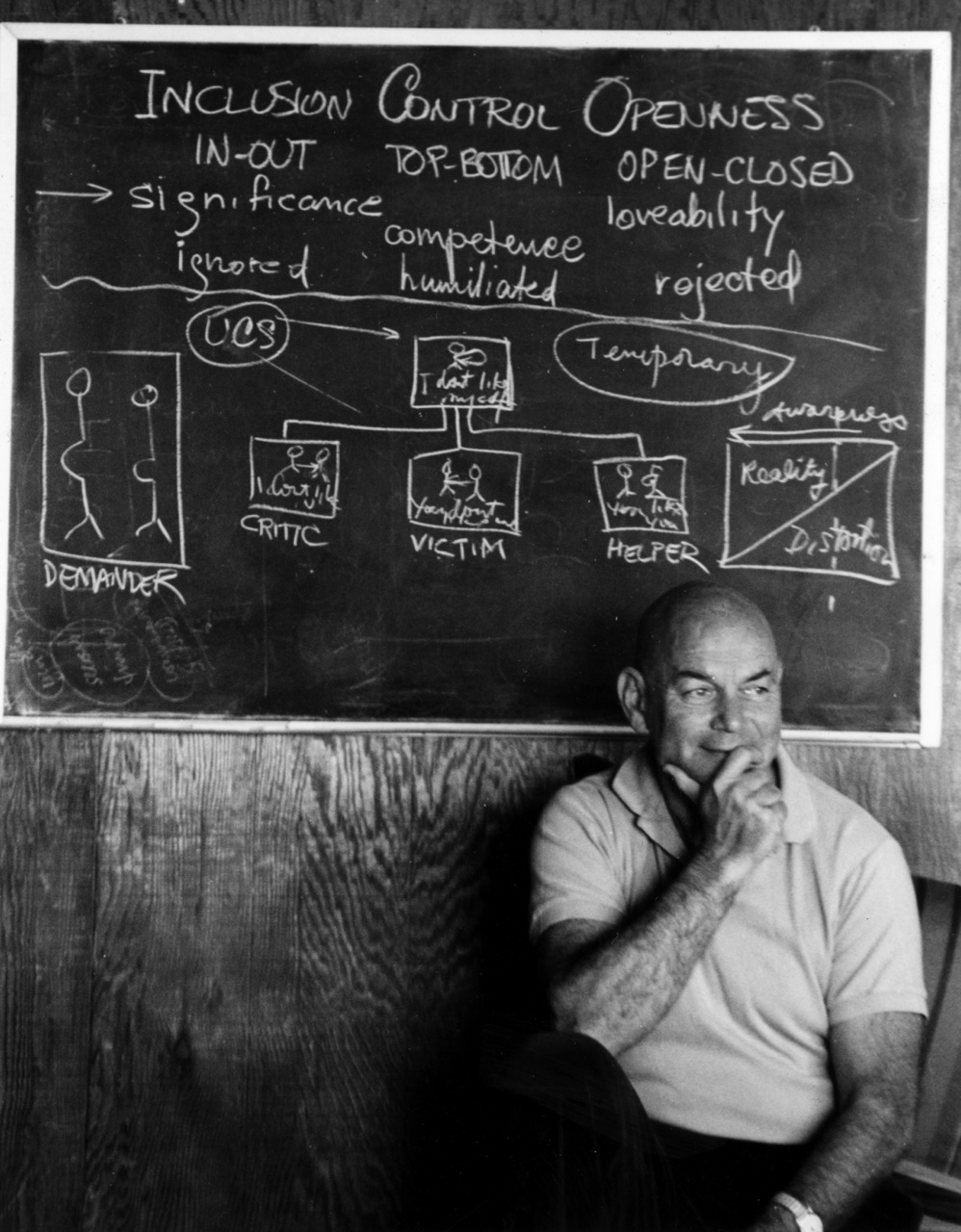
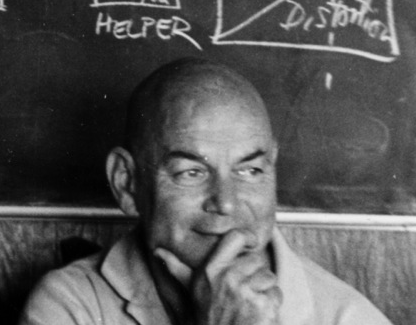
Will Schutz, PhD
Created by American psychologist Will Schutz, Ph.D., The Human Element® is a human and organisational development methodology based on the FIRO theory. It combines scientific rigor, an experiential pedagogical approach and over three decades of application in leading organisations such as AT&T, NASA, and the World Bank.
Based on the principle that the quality of human relationships is crucial for the effectiveness of organisations, this approach helps individuals and teams deepen self-awareness, understand the mechanisms that influence their behaviours, and reduce defensive attitudes that hinder communication and collaboration.
By promoting authenticity, individual responsibility, and openness in relationships, The Human Element® contributes to creating work environments where people feel valued, trust is strengthened and each member can fully develop their potential. In this way, it fosters more collaborative and responsible organizational cultures, enhancing individual and collective well-being and performance sustainably.
The FIRO theory
Fundamental Interpersonal Relations Orientation
How did the FIRO theory originate and how did it contribute to a new understanding of human relationships?
In this video, discover the history of this theory developed by Will Schutz and the principles that underpin the methodology The Human Element®.
Fundamental principles
The model proposes an experiential pedagogy based on 3 fundamental principles
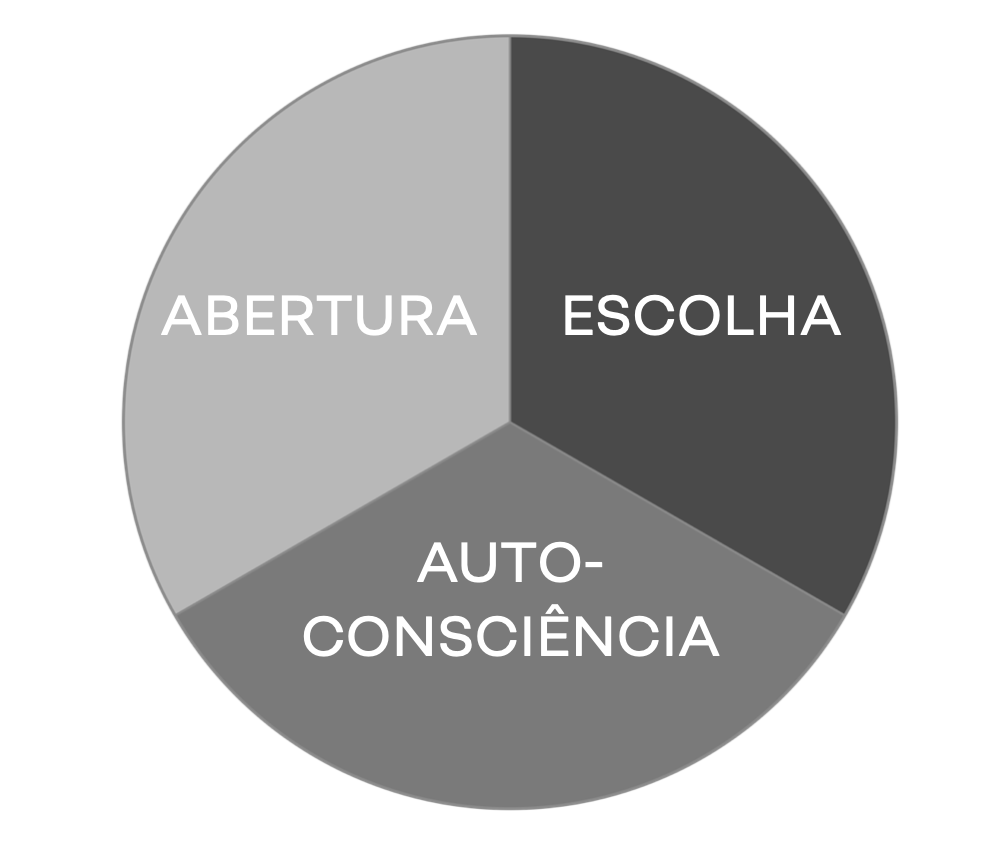
Openness & Truth
Truth is the great simplifier. It is the fastest way to solve problems. When we are open, we make teamwork and decision-making easier, becoming more effective and efficient.
Accountability & Choice
Choice generates responsibility. What we choose to do or not do, consciously or unconsciously, determines our outcomes. Each of us is 100% responsible for the situation we find ourselves in.
Self-awareness
Self-awareness brings clarity. The higher our level of self-awareness and self-esteem, the more rational our behaviour becomes and the less defensive we become. When we are aware of ourselves, we can work better with others.
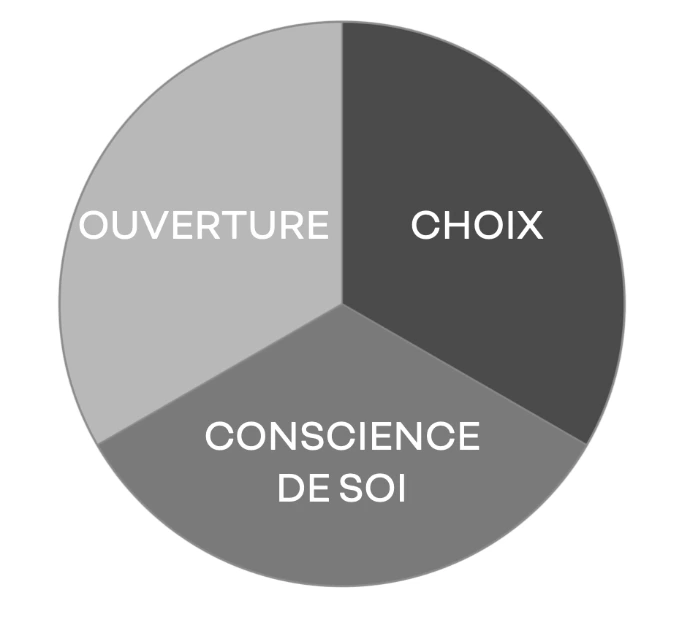
Openness & Truth
Truth is the great simplifier. It is the fastest way to solve problems. When we are open, we make teamwork and decision-making easier, becoming more effective and efficient.
Accountability & Choice
Choice generates responsibility. What we choose to do or not do, consciously or unconsciously, determines our outcomes. Each of us is 100% responsible for the situation we find ourselves in.
Self-awareness
Self-awareness brings clarity. The higher our level of self-awareness and self-esteem, the more rational our behaviour becomes and the less defensive we become. When we are aware of ourselves, we can work better with others.
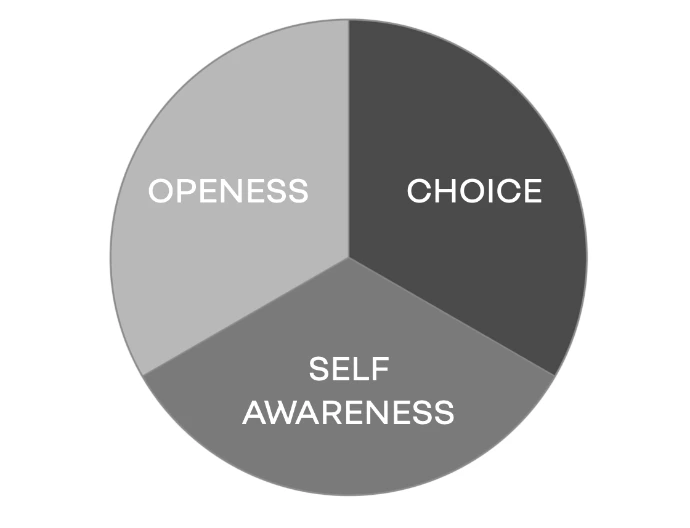
Openness & Truth
Truth is the great simplifier. It is the fastest way to solve problems. When we are open, we make teamwork and decision-making easier, becoming more effective and efficient.
Accountability & Choice
Choice generates responsibility. What we choose to do or not do, consciously or unconsciously, determines our outcomes. Each of us is 100% responsible for the situation we find ourselves in.
Self-awareness
Self-awareness brings clarity. The higher our level of self-awareness and self-esteem, the more rational our behaviour becomes and the less defensive we become. When we are aware of ourselves, we can work better with others.
Elements of awareness™
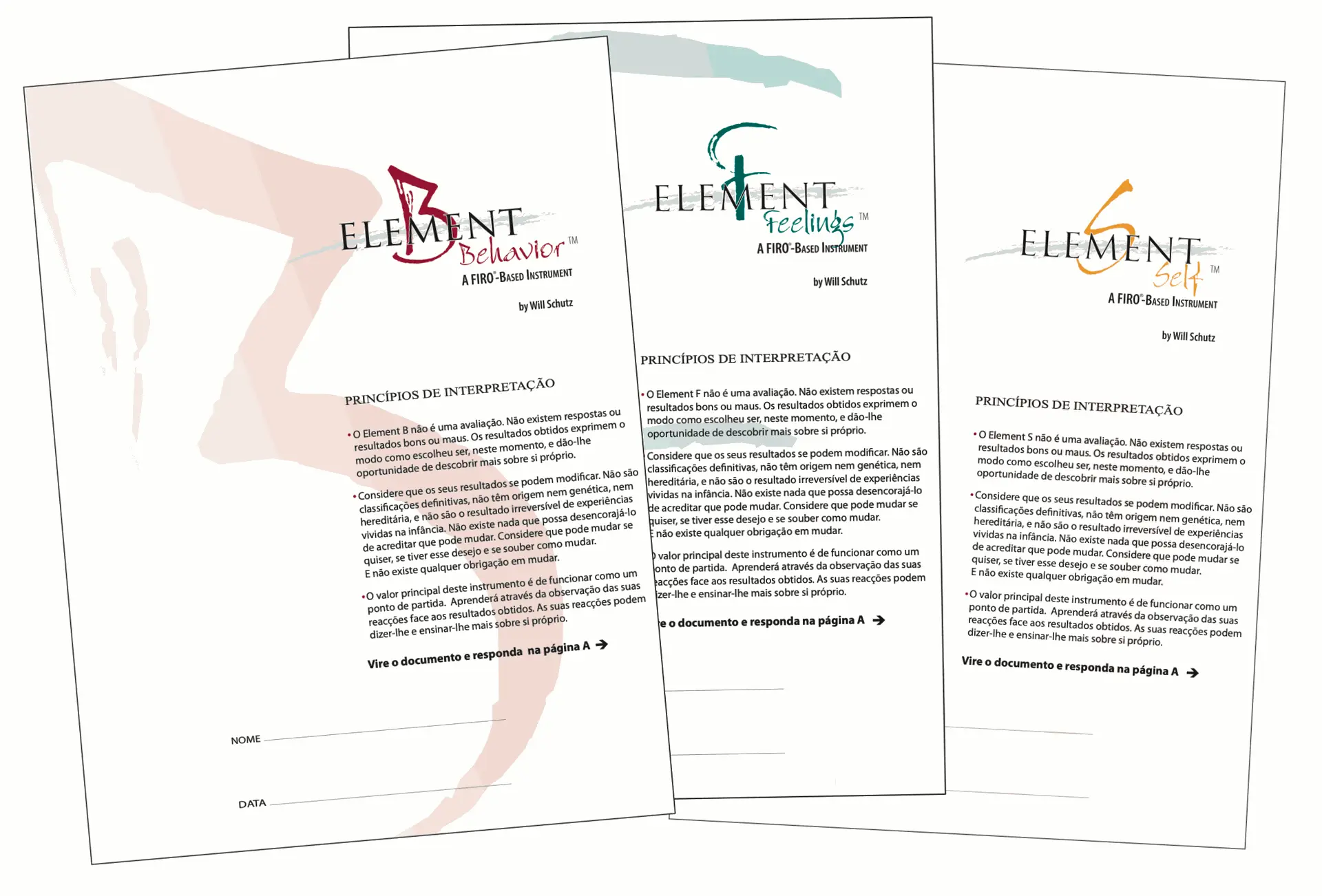
The Elements of Awareness™ are an integrated set of assessment tools based on FIRO (Fundamental Interpersonal Relations Orientation) theory. They provide a deeper understanding of how individuals function, relate to others, and influence interpersonal dynamics. Used individually or in combination, these tools reveal different dimensions of human behavior and help develop a deeper understanding of oneself, others, and interpersonal relationships.
In our programmes, we integrate these instruments into experiential pedagogical approaches that transform awareness into learning and action. By better understanding what influences our behaviors and our relationships, it becomes possible to make more conscious choices, adjust the way we interact, and develop greater Relational Intelligence. This creates the conditions for more open and authentic relationships, more effective cooperation, and a sustainable impact on individual and collective performance.
"At the heart of human behaviour lies the Self. Addressing business and leadership challenges effectively begins with one essential step: self-awareness.
Deepening self-awareness fosters self-acceptance and, in turn, self-esteem. As people develop a greater understanding and appreciation of themselves, they become more open and honest with their colleagues. This allows them to redirect the energy previously spent on self-defence, withholding information and managing interpersonal conflicts towards more productive work."
The greater our self-esteem, the greater our ability to live and work with openness, honesty, and responsibility.
In an ideal organisation, people take responsibility for their actions, spending less time looking for blame. This attitude is particularly visible in project management, where team members hold themselves and each other accountable, reinforcing trust, alignment, and collective effectiveness.
In an ideal organisation, there is space to express ideas and concerns transparently, both positive and negative. When a question is asked, a clear and honest response is expected from everyone, as this openness reinforces trust, facilitates problem-solving, and improves the quality of working relationships.
People work better when they feel good about themselves. In an ideal organisation, they feel important, competent, and valued, which allows them to continuously explore their full potential, without seeking constant approval or recognition from others.
In an ideal organisation, the roles and the work environment are aligned with the strengths, experience, skills, and preferences of each person. The organisation creates the necessary conditions for employees to give their best and achieve high levels of performance.
Decisions that involve and mobilise people through appropriate processes lead to greater commitment, more consistent execution, and more lasting motivation. Greater participation in the process not only reinforces engagement but also stimulates creativity by integrating a wider diversity of perspectives and possible solutions.
People find personal satisfaction in work, as well as in relationships with family and friends. In an ideal organisation, employees are aware of how they feel at all levels (mental, emotional, and physical) and set aside time to take care of themselves.
Leaders are able to inspire others to go further, improve their performance, and achieve higher levels of success. In an ideal organisation, leaders are open and vulnerable, inspiring those around them to give their best, without fear of acknowledging mistakes, doubts, or uncertainties.
When there is a focus on personal growth, anxiety decreases and productivity increases significantly. People work close to their maximum potential and coordination among employees is strengthened, resulting in higher levels of performance.
This organisation reflects the principles of an ideal organisation, achieving exceptional results beyond financial performance. Its positive impact extends to society and the environment, integrating people and the planet as central dimensions of its operations.
In search of the Ideal organization...
What would an organisation look like where people can fully develop their potential, collaborate authentically and take responsibility for their choices and behaviors?
The Human Element® methodology presents a vision of organisational culture built around nine essential dimensions that contribute to creating more human, accountable and effective workplaces.
Open sessions
Discover the upcoming inter-company training sessions that use The Human Element® approach
Want to know more about The Human Element®
The Human Element® methodology has an international presence through a network of certified consultants, trainers and professionals. Its management and development are overseen by Business Consultants, Inc. (BCon), headquartered in Japan.
Visit the international The Human Element® website to learn more about the methodology, its applications, and the global network of certified professionals.
Contact us !
We would be delighted to talk to you about the application of The Human Element® approach

Luís Morgadinho
Head of Pedagogy, Executive Coach & Master trainer.
As Founder and Head of Pedagogy, Luís designs and oversees the organisation’s methodologies and human development programmes. As an Executive Coach and Master Trainer, he supports leaders and teams, ensuring the quality, consistency and impact of every intervention.

Call us at+351 211 147 326
Monday to Friday, 9:00 am – 5:30 pm (Lisbon time)
Message
Please fill in the following form